


UKGC: 4% of Online Gamblers in Britain Used Illegal Gambling Sites
Published: November 5, 2026 | Author: Roxy Vance
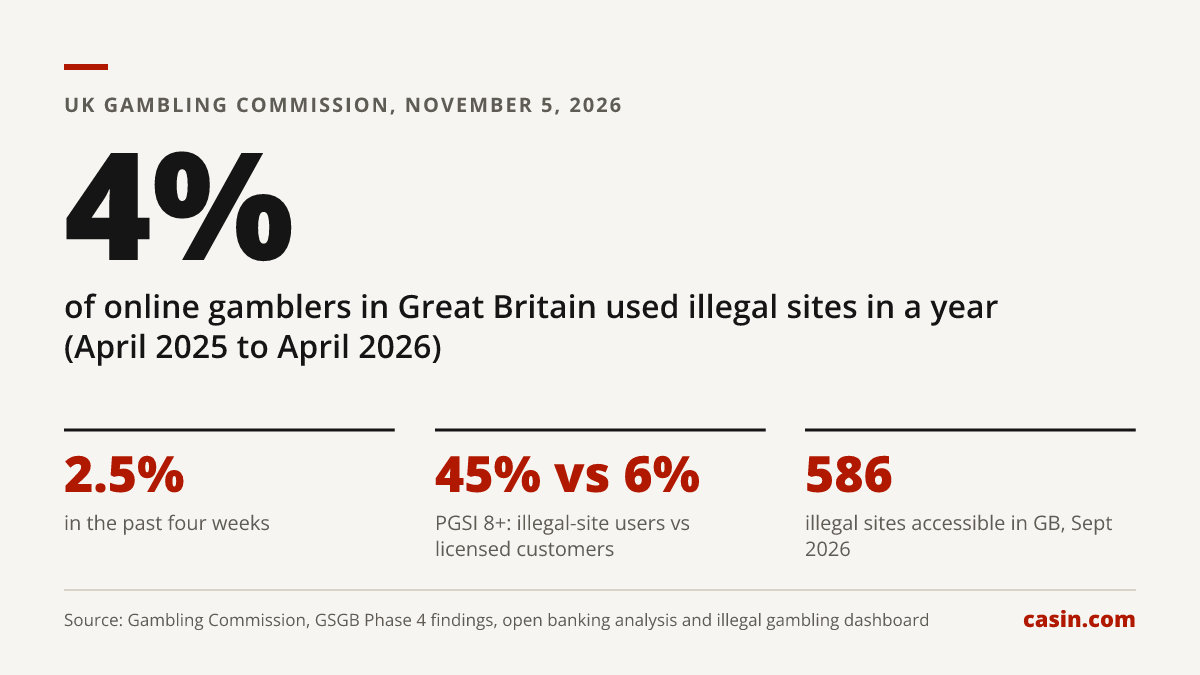
About 4% of people who gambled online in Great Britain over a year used illegal gambling websites, according to new estimates from the UK Gambling Commission (UKGC). The figures, published on November 5, 2026, add to the regulator’s evidence on illegal gambling, and earlier UKGC research found far higher rates of problem gambling among people who use illegal operators.
What the Survey Found
Among people who gambled online in the past 12 months, 2.5% had engaged with illegal gambling websites in the past four weeks, and a further 1.5% had done so in the past 12 months but not the past four weeks. The group excludes people whose only gambling was National Lottery products.
Across the whole population, including people who don’t gamble, 0.6% engaged with illegal sites in the past four weeks and a further 0.4% in the past 12 months. Another 4.6% showed “limited indications” of engagement, and 94.4% showed no indication of using an illegal site. Engagement was higher among men than women and more common among younger adults, particularly those aged 18 to 24.
The data covers April 2025 to April 2026, the first year of the measure in the Gambling Survey for Great Britain (GSGB).
How It Was Measured
The UKGC says simply asking people whether they have used an illegal site is not reliable, because the answer depends on people knowing an illegal market exists, recognizing an illegal site and remembering accurately. Instead, it built an “Illegal Gambling Index” with Yonder Consulting from seven self-reported behaviors. They include using a site known not to be on GAMSTOP, signing up because no age or identity check was needed, canceling a withdrawal before it reached a bank, using a VPN and gambling with cryptocurrency. The most common among illegal-site users were using a site known not to be registered with GAMSTOP (58.0%) and canceling a withdrawal (56.6%).
Higher Rates of Problem Gambling
A separate UKGC analysis of banking data linked to survey answers, published October 28, found that 45% of people with a detected transaction with an illegal operator had a Problem Gambling Severity Index (PGSI) score of 8 or higher. That compares with 6% of licensed gambling customers in the same dataset. The UKGC said the method cannot show whether illegal gambling causes the harm.
Sue Young, the UKGC’s Executive Director for Operations, said that while engagement across the population “appears low and stable from these indicators, there is a cohort of online gamblers who use these sites and research suggests those consumers who use illegal operators are more likely to experience harm.”
The updated Illegal Gambling Data Dashboard identified 586 illegal gambling websites accessible in Great Britain in September 2026, 4% more than a year earlier, though the UKGC says the count is not complete. It took disruption action against 311 illegal sites in the second quarter of 2026-27, 38% more than the previous quarter.
What It Means for Players
Players using a UKGC-licensed business are covered by Great Britain’s consumer and gambling protection rules; illegal sites sit outside them. Licensed operators must display that they are licensed and link to the UKGC’s public register, which shows what each business may offer and any regulatory action against it. Our guide to legal online gambling in Europe explains how licensing works across the region.
The figures also matter for tax policy. Remote Gaming Duty rose from 21% to 40% on April 1, 2026, and the government’s policy paper said some people could respond by gambling through the illegal market. We covered the tax rises’ effect on one operator in our report on evoke’s third-quarter trading update.
What Happens Next
The UKGC plans more detailed analysis once future survey waves give larger samples, and will add new questions to the GSGB in 2027. “We want to kick crime out of gambling,” Young said.

