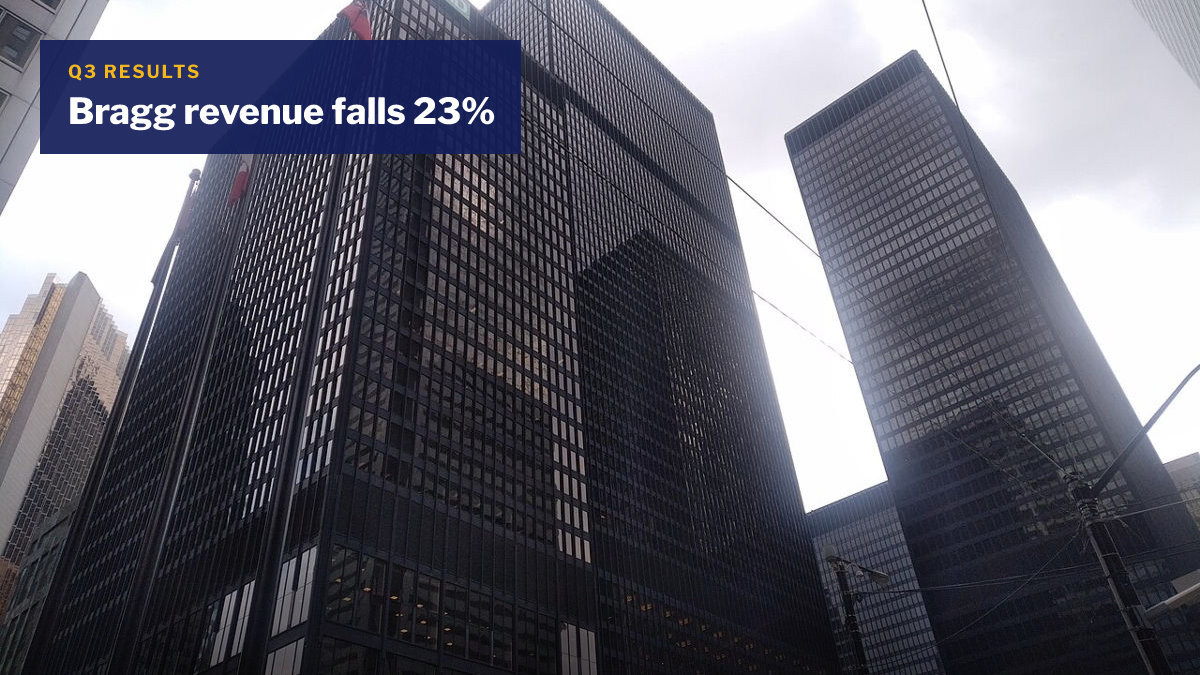
Bragg Gaming Group, the Toronto-based supplier of online casino games and platform technology, reported third-quarter 2026 revenue of €20.6 million on November 13, 2026, down 23% from €26.8 million a year earlier, as its net loss widened to €4.3 million from €2.3 million. The company blamed customers leaving its Dutch platform and third-party game studios in Brazil connecting directly with operators, and it has since stopped supplying Brazil, which suspended licensed online gambling in October.
The figures come from Bragg’s third-quarter results release, filed with the US Securities and Exchange Commission (SEC). Bragg is listed on Nasdaq and the Toronto Stock Exchange and supplies its own and third-party casino games, plus platform technology, to operators in more than 30 regulated markets.
- Q3 revenue
- €20.6M
- down 23%
- Adj. EBITDA
- €3.0M
- Q3 2025: €4.4M
- Net loss
- €4.3M
- Q3 2025: €2.3M
- Gross margin
- 56%
- Q3 2025: 55%
Results
| € thousands | Q3 2026 | Q3 2025 | Change |
|---|---|---|---|
| Revenue | 20,631 | 26,804 | −23.0% |
| Normalized revenue | 19,981 | 22,671 | −11.9% |
| Gross profit | 11,596 | 14,650 | −20.8% |
| Adjusted EBITDA | 3,001 | 4,445 | −32.5% |
| Operating loss | 3,244 | 1,202 | 2,042 wider |
| Net loss | 4,287 | 2,305 | 1,982 wider |
Normalized revenue leaves out BetCity, a platform customer whose migration away from Bragg is complete, and Drayton International, which Bragg bought in July. On that basis revenue fell 11.9% from a year earlier but rose 3.7% from the second quarter.
Gross margin rose to 56% from 55% because more revenue came from Bragg’s own games and less from aggregated third-party content. Gross profit still fell 20.8%, and that €3.1 million drop outweighed about €1.6 million of cost savings in the quarter.
Netherlands and Brazil
Bragg reports revenue by the jurisdiction where its customers are contracted, which the company says does not track where players are.
| Contracted in (€ thousands) | Q3 2026 | Q3 2025 | Change |
|---|---|---|---|
| Malta | 5,081 | 4,551 | +11.6% |
| United States | 2,274 | 3,043 | −25.3% |
| Brazil | 1,990 | 2,102 | −5.3% |
| Netherlands | 103 | 6,350 | −98.4% |
| All other | 11,183 | 10,758 | +4.0% |
| Total | 20,631 | 26,804 | −23.0% |
“All other” combines six more jurisdictions and the filing’s own “Other” line. Revenue from Dutch customers almost disappeared, a drop larger than the group’s entire decline, which Bragg’s management report puts down to the “anticipated roll-off of legacy platform contracts in the Netherlands.”
On September 25, 2026, Brazil’s president signed a provisional measure suspending licensed online betting and casino gaming, and Bragg stopped supplying its licensed Brazilian customers when operators had to close on October 6. The measure needs approval from Brazil’s National Congress to stay in force and faces court challenges from industry associations. Flutter also closed its Brazilian business under the measure.
Brazil brought in 9.6% of Bragg’s third-quarter revenue, but the company says it was mostly lower-margin aggregated content, so the cash impact is limited. The quarter’s €581,000 impairment charge includes €413,000 to write off an investment in a Brazil-focused associate.
New Chief Executive and Cost Cuts
Morten Tonnesen, Bragg’s chief operating officer since March 2026, became interim chief executive on November 6, 2026, and Matevž Mazij moved from chief executive to strategic advisor. “Our cost reductions have not yet caught up with the revenue we have lost, and closing that gap is the immediate priority,” Tonnesen said.
Restructuring rounds announced in January and July have cut the workforce by about 27% this year, and Bragg expects them to save about €10.5 million a year once fully in place. It ended September with 390 employees and contractors, down from 537 a year earlier, and €2.5 million in cash, down from €6.7 million at the end of 2025.
North America
Tonnesen said revenue from Bragg’s own games in Canada and the US grew 7% in the quarter and 21% over the first nine months. Revenue from all customers contracted in the US fell 25.3% in the quarter. Bragg says it is integrated with top-tier US online casino operators including FanDuel, DraftKings, Rush Street, Caesars and BetMGM, and holds licenses in key iGaming states. It says the Drayton deal, paid for with $9.0 million in shares, is designed to expand its presence in regulated US sports betting and horse racing.
Bragg gave no numeric guidance. Chief Financial Officer Robert Bressler said Bragg could be a “solid alternative” to rivals in the US, EGR reported.